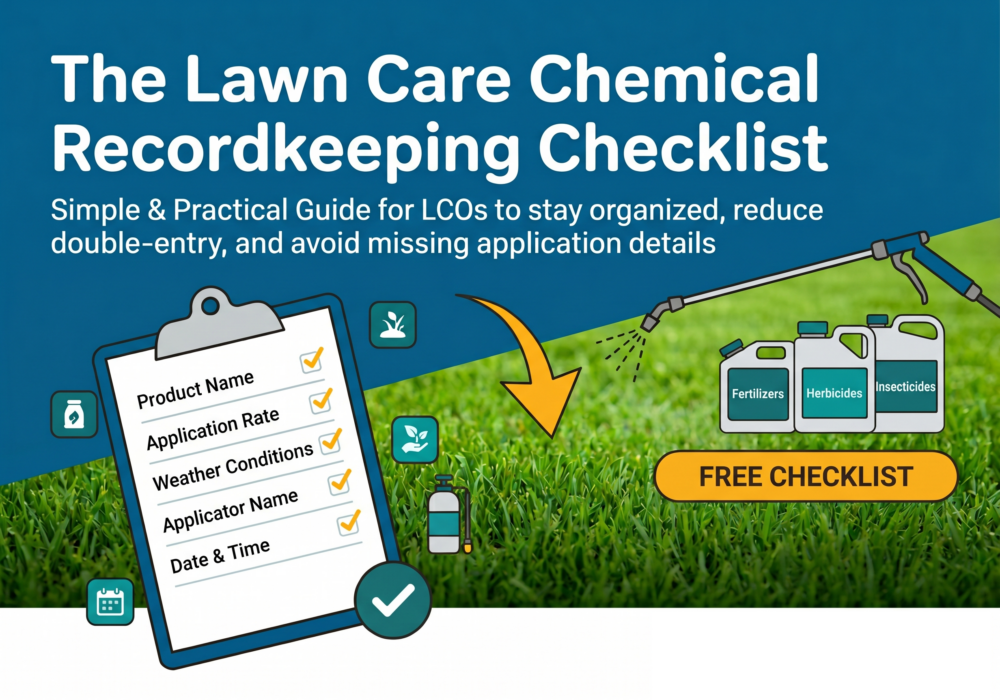
Spending too much time on chemical recordkeeping? This checklist should help you see where your current process may be creating extra work, missing details, or slowing down your team.
This simple and practical checklist was designed to help treatment-focused LCOs stay organized, reduce double-entry, and avoid missing important application details when applying fertilizers, herbicides, insecticides, and other lawn treatment products.
Small disclaimer:
This checklist is for operational organization only and is not legal advice. Always follow your product labels and your state/local recordkeeping requirements.
Quick Self-Audit
Are Your Chemical Records Becoming a Bottleneck?
Check any that apply:
- ☐ We enter chemical/application details in more than one place.
- ☐ We still use paper forms, notebooks, or handwritten logs.
- ☐ We sometimes have to chase technicians for missing application details.
- ☐ It is hard to quickly see what was applied, where, when, and by whom.
- ☐ We do not have one consistent process across all technicians.
- ☐ We are not confident every application record includes the same required fields.
- ☐ We have to manually match service notes, invoices, and chemical records.
- ☐ We would struggle to quickly pull records for a customer, property, or date range.
- ☐ We rely on memory, photos, texts, or paper notes to fill gaps later.
If you checked 3 or more, your chemical recordkeeping process may be costing your team unnecessary time.
Application Record Checklist
For Every Lawn Treatment Application, Capture:
Customer + Property Details
- ☐ Customer name
- ☐ Service address
- ☐ Property or lawn area treated
- ☐ Program or service type
- ☐ Application round, if applicable
- ☐ Total treated square footage or acreage
Date + Technician Details
- ☐ Date of application
- ☐ Start/end time, if required by your process
- ☐ Technician or applicator name
- ☐ Applicator license/certification number, if applicable
- ☐ Crew or route name, if applicable
Product Details
- ☐ Product name
- ☐ Product type: fertilizer, herbicide, insecticide, fungicide, surfactant, etc.
- ☐ EPA registration number, if applicable
- ☐ Active ingredient information
- ☐ Application rate
- ☐ Unit of measure
- ☐ Total amount applied
- ☐ Mix/tank details, if applicable
- ☐ Application method: broadcast, spot spray, granular, etc.
Site + Condition Details
- ☐ Target pest, weed, or treatment purpose
- ☐ Weather conditions, if required
- ☐ Wind speed, if relevant
- ☐ Temperature, if relevant
- ☐ Notes about sensitive areas, skipped areas, or special instructions
- ☐ Customer-facing service notes
Follow-Up Details
- ☐ Re-entry interval, if applicable
- ☐ Watering instructions
- ☐ Mowing instructions
- ☐ Customer notification completed
- ☐ Next recommended service
- ☐ Photos or attachments, if needed
Process Checklist
Your Chemical Tracking Process Should Make It Easy To:
- ☐ Record application details from the field.
- ☐ Keep service records connected to the customer/property.
- ☐ Avoid entering the same information in multiple places.
- ☐ See which services have been completed.
- ☐ Pull a customer’s treatment history quickly.
- ☐ Review what product was used on a specific property.
- ☐ Track product usage across technicians or routes.
- ☐ Standardize how every technician logs applications.
- ☐ Reduce missing or incomplete service notes.
- ☐ Generate records without digging through paper logs.
Many times the true issue is operational if records, services, technicians, customers, and billing are disconnected in your company.
Common Red Flags
Chemical Recordkeeping Red Flags
Your process may need improvement if:
- ☐ Technicians write notes in the field and someone else re-enters them later.
- ☐ Product details are stored separately from the customer/service record.
- ☐ You cannot quickly answer, “What did we apply at this property last time?”
- ☐ You are tracking treatments in notebooks, spreadsheets, invoices, and software.
- ☐ Different technicians record information in different formats.
- ☐ You only discover missing records days or weeks later.
- ☐ You have to manually calculate rates or product totals after the fact.
- ☐ You are unsure whether your records are complete until someone asks for them.
- ☐ Your billing process and completed service records do not always match.
- ☐ Your current software does not make chemical tracking easy.
Better System Checklist
A Better Chemical Tracking System Should Help You:
- ☐ Keep customers, properties, services, and chemical records connected.
- ☐ Give technicians a clear way to record what happened in the field.
- ☐ Reduce duplicate entry between invoices, service notes, and records.
- ☐ Make it easy to find past applications by customer, property, technician, or date.
- ☐ Standardize products, rates, and application details.
- ☐ Support treatment-focused lawn care workflows.
- ☐ Help the office know what is done, what is missing, and what needs follow-up.
- ☐ Keep your operation organized as you grow.
👉 Download a printable version of the Lawn Care Recordkeeping Checklist
Still tracking chemical records in more than one place?
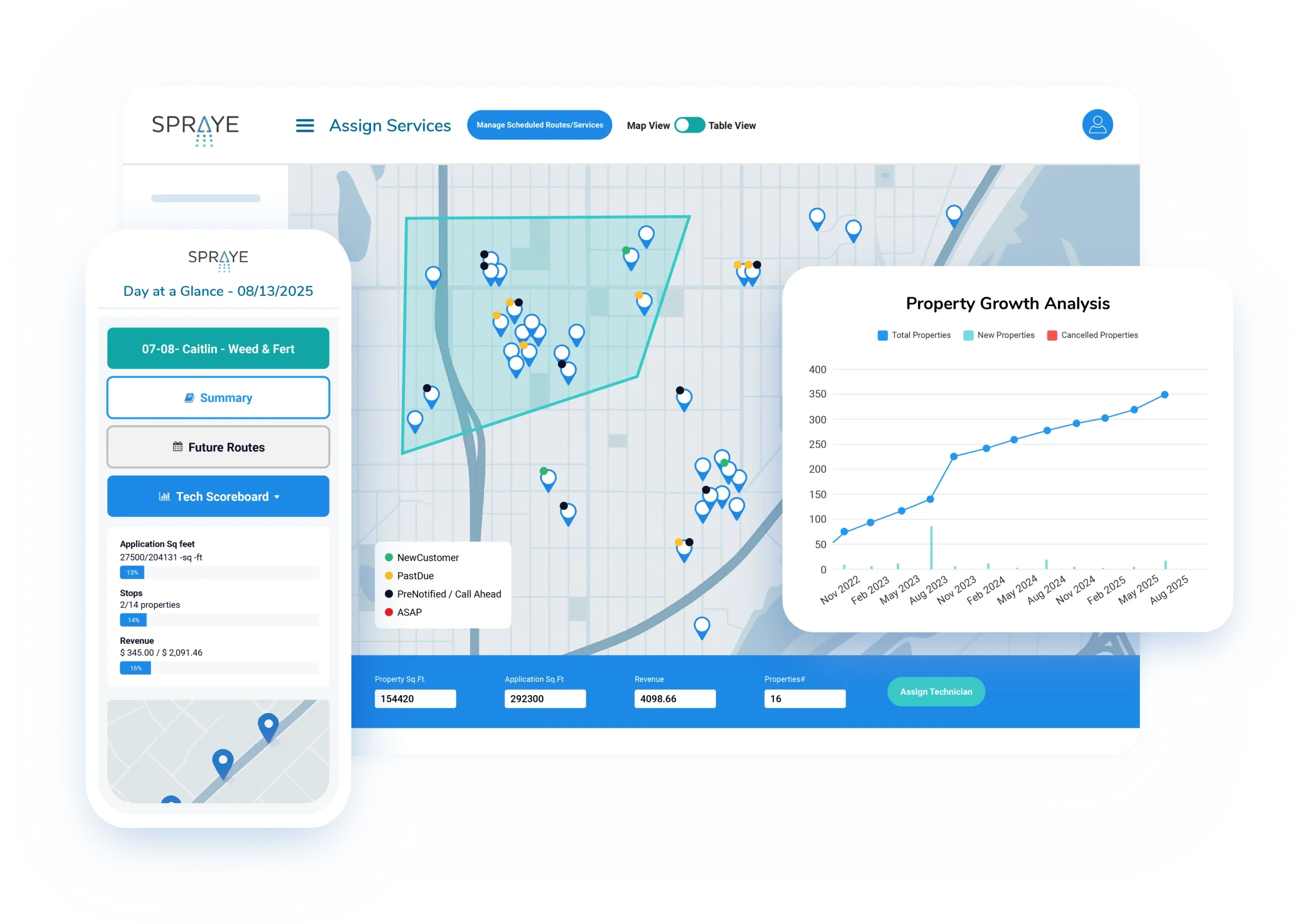
SPRAYE helps lawn care companies manage customers, scheduling, completed services, billing, and chemical records in one system built for treatment-focused LCOs.
Book a Spraye Demo >>