Jared Mitchell
I can't say enough great things about this software.

That might sound strange, especially when you’re trying to grow your business. More quote requests, more phone calls, and more website form submissions usually feel like a good thing.
But if those leads are outside your service area, too far from your current routes, or in neighborhoods you don’t actually want to expand into, they can quietly waste time, create scheduling headaches, and hurt profitability.
For weed control and fertilization companies, this matters even more. A new customer usually does not mean one quick visit. It often means multiple applications across the season, recurring communication, route planning, service records, billing, renewals, and long-term customer management.
So before you chase every new lead that comes in, it is worth asking:
Are these the right leads, in the right areas, for the kind of business you are trying to build?
Most lawn care companies want more leads. But more leads are only valuable if they are leads you can realistically and profitably service.
Without a clear system for qualifying leads by location, your team may spend time:
At first, this may not seem like a major issue. One out-of-area lead here and there may only take a few minutes.
But over time, those minutes add up. Even worse, accepting the wrong jobs can create route inefficiency that affects your team all season long.
It is easy to assume that growth means saying yes to more customers in more places. But for lawn care businesses, especially recurring service businesses, growth is not just about customer count.
Growth is about profitable density.
A customer who is 35 minutes away from the rest of your route might increase revenue, but that does not always mean they increase profit. If your technician has to drive too far between stops, your business may lose time, fuel, capacity, and efficiency.
A denser route, on the other hand, allows your team to complete more work in less time. That can mean:
For weed control and fertilization companies, route density is especially important because most customers are serviced multiple times per year. If a customer is inefficient to service once, that inefficiency is repeated every round.
Scattered customers can create problems across the entire operation.
Your office team has to spend more time coordinating schedules. Your technicians spend more time driving. Your routes become harder to optimize. Your customer communication becomes harder to manage. And your business may find itself stretched across too many areas without enough density in any of them.
This can lead to a frustrating situation where the company is technically growing, but the day-to-day operation feels harder, less organized, and less profitable.
That is why service area strategy matters.
A smart growth plan is not just about getting more people to request quotes. It is about making sure the right people are requesting quotes from the right areas.
Before investing more into marketing, advertising, door hangers, postcards, SEO, or referral campaigns, lawn care companies should get clear on where they want growth to happen.
Ask questions like:
That last question is important.
Not every service has the same profitability, crew requirements, visit frequency, or drive-time tolerance. For example, you may be willing to travel farther for a higher-value service, but you may want tighter boundaries for recurring lawn treatment routes.
Having a defined service area helps you make those decisions intentionally instead of reacting to every lead as it comes in.
This is where our partner, My Service Area, can be a valuable tool for lawn care companies.
My Service Area helps businesses qualify website leads based on the customer’s address before the lead moves further into the sales process. Instead of manually checking every address, businesses can define their service zones and use MSA to help determine whether a new inquiry is inside or outside the areas they serve.
For lawn care companies, this can help reduce wasted time, organize leads geographically, and support smarter growth decisions.
In simple terms, MSA helps answer an important question early:
Is this lead in an area we actually want to service?
That is a powerful filter for any growing lawn care business.
Weed control and fertilization companies have a unique operational challenge because most services are part of recurring treatment programs.
A single customer might need multiple applications throughout the year, along with pre-service notifications, post-service updates, chemical application records, invoices, payment reminders, and renewals.
That means the location of each customer matters a lot.
When your customers are grouped efficiently, each treatment round becomes easier to schedule and complete. When your customers are spread too far apart, each round becomes more time-consuming and more expensive to run.
Pre-qualifying leads by service area helps protect the efficiency of your future routes before those customers are ever added to your schedule.
My Service Area helps lawn care companies focus on getting the right leads from the right areas.
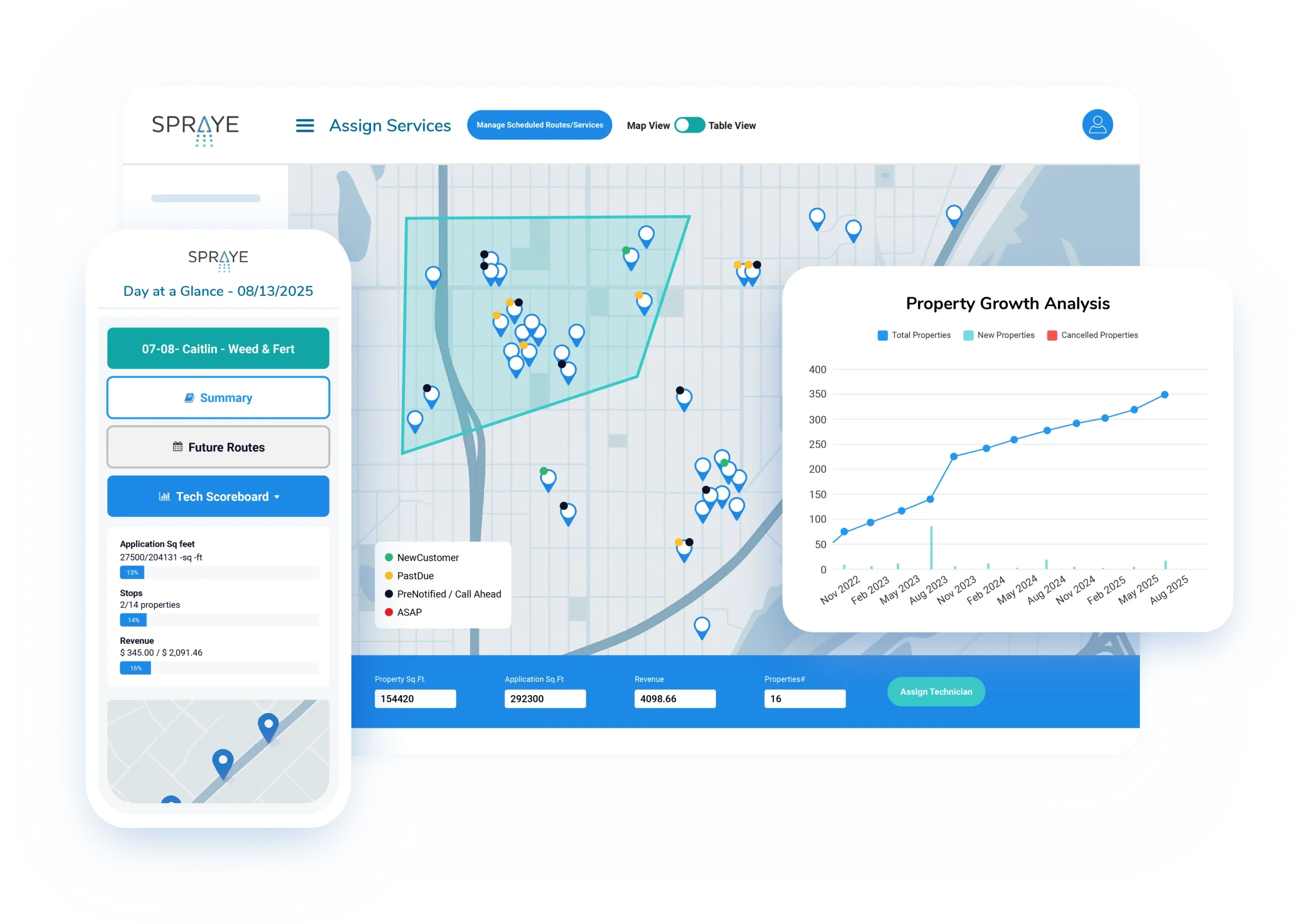
SPRAYE helps manage what happens after those qualified leads become customers.
Once a customer is a good fit for your service area, SPRAYE helps you manage the operational side of the relationship, including estimates, customer records, program services, scheduling, routing, technician workflows, chemical tracking, invoicing, payments, communication, and renewals.
Together, the two tools support a smarter growth process:
This creates a better experience for both your team and your customers.
Your office team spends less time chasing poor-fit leads. Your technicians spend less time driving inefficient routes. Your business can focus growth in the areas that make the most sense.
Many lawn care companies spend money on marketing before they have a clear service area strategy.
But if you do not know where you want more customers, your marketing may generate leads that are difficult or unprofitable to service.
Before running your next campaign, it may be helpful to review:
This kind of clarity helps you make better decisions about where to spend your marketing dollars.
Instead of trying to grow everywhere, you can focus on growing where it actually makes sense.
A bigger service area is not always better.
For many lawn care companies, the better opportunity is to grow deeper inside the areas they already serve well. That may mean adding more customers in existing neighborhoods, tightening route density, improving scheduling efficiency, and being more selective about which leads are worth pursuing.
The goal is not just more revenue.
The goal is a stronger, more profitable, more manageable business.
When you combine better service area qualification with an organized lawn care CRM like Spraye, you can build a growth process that supports your team instead of overwhelming it.
If your team is spending too much time sorting through leads you cannot service, manually checking addresses, or trying to build routes around scattered customers, it may be time to rethink how leads are qualified before they enter your sales process.
The right systems can help you focus on the customers who are the best fit for your business, your routes, and your long-term growth goals.
SPRAYE is proud to partner with My Service Area to help lawn care companies grow smarter, improve route density, and create more efficient operations from the first website inquiry to the completed service visit.
To learn more about how My Service Area helps lawn care businesses qualify leads by location, visit MyServiceArea.com.
Learn why SPRAYE is trusted by hundreds of lawn care operators across the country.
I can't say enough great things about this software.
I’m still pretty new to the SPRAYE software. Setting it up and getting products, services and programs built does take some time but they help you get it all setup, all you have to do is get them your customer info. Makes my life way easier for sure!
Once it's all done everything goes pretty smooth, especially when you're in the field working. It does pretty much everything else for you automatically from how you have your programs built. Hopefully that helps you.
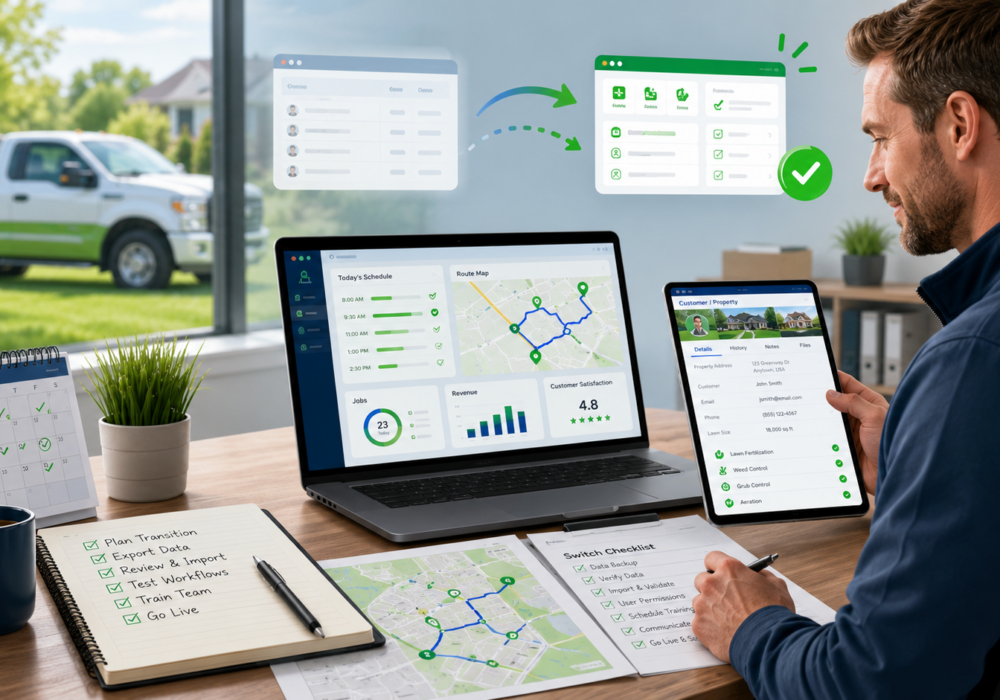
Switching lawn care business software can feel overwhelming—especially when your lawn care company already has...
Read moreNot every lawn care lead is a good lead. That might sound strange, especially when you’re trying to grow...
Read more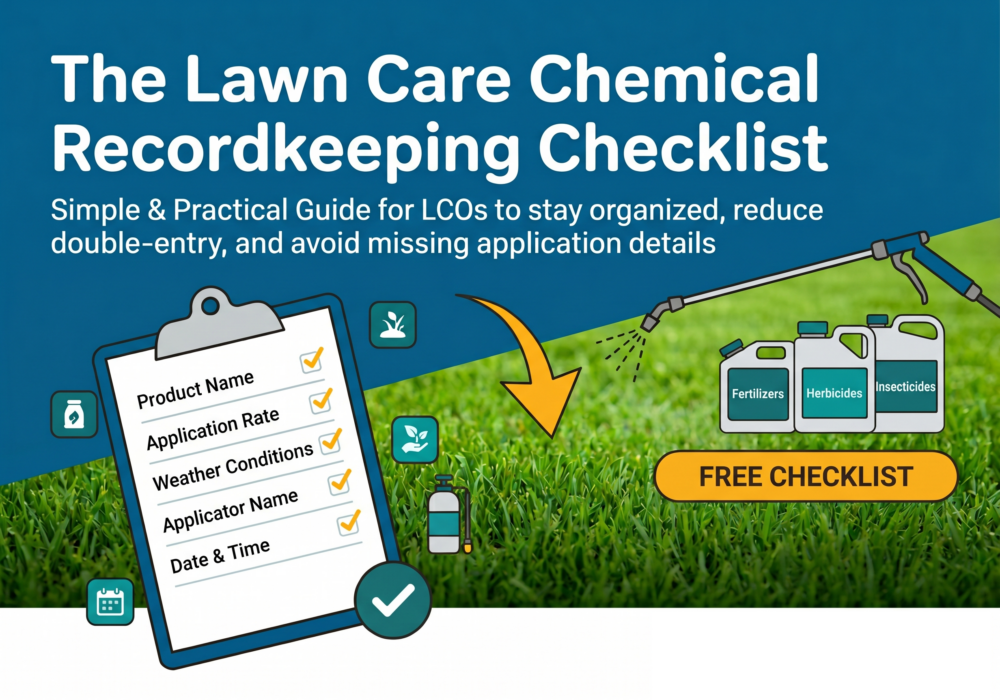
Spending too much time on chemical recordkeeping? This checklist should help you see where your current process...
Read moreHave questions? Want to see it in action? Even if you aren’t ready to move right now, you can still check it out and learn if SPRAYE could make a difference for your business. We promise: absolutely no pressure and no commitment necessary.