Drew Plunk
TNT Greens, LLC, Owner
TNT Greens, LLC, Owner
As always, I love your system! Thanks for always being so responsive. I will be recommending you to my colleagues.
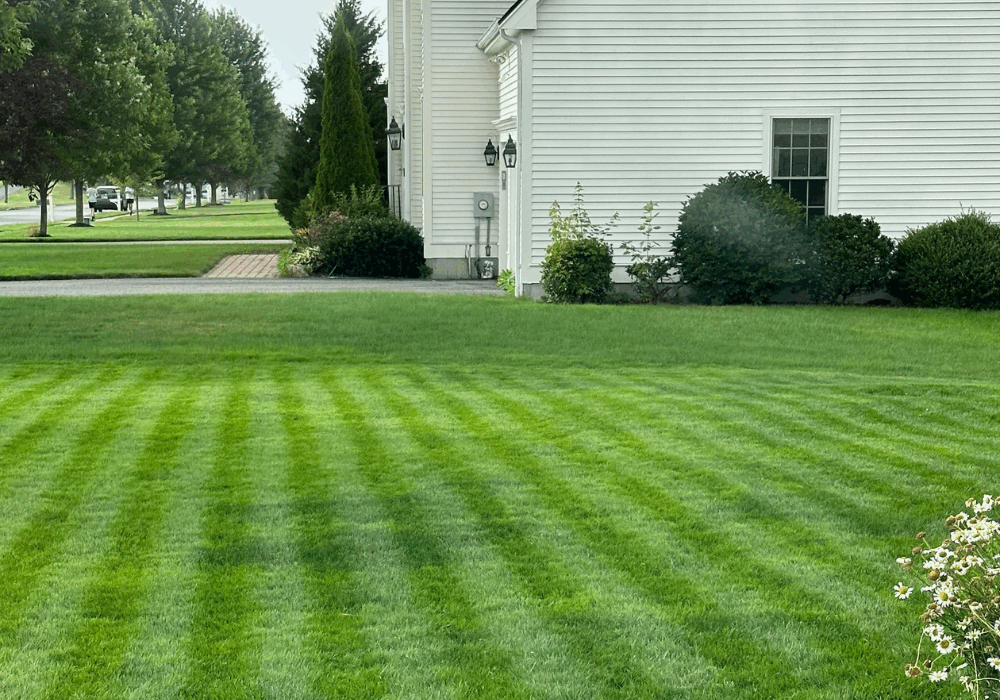
After a challenging summer, your cool-season turfgrass may require a fertility boost in the fall. But it is important to differentiate late-season fertilization from winter or dormant fertilization.
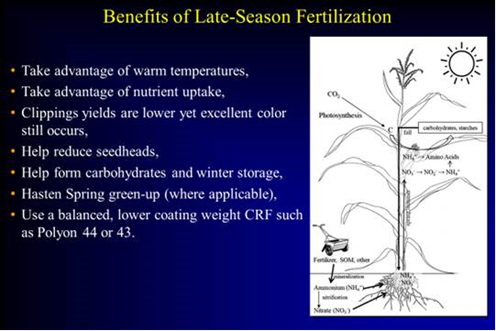
Applying fertilizer in late fall encourages root growth, increases carbohydrate storage, and maintains color in cool-season grasses. The advantages of this late-season nitrogen application will manifest in the spring and summer with quicker green-up, enhanced grass density, and better resistance to spring diseases like red thread and pink patch.
“Fall is a crucial time for plants, as weather conditions are optimal for nutrient uptake,” explains Cale Bigelow, Ph.D., a professor of agronomy at Purdue University.
With so many fertilizer options available, it can be overwhelming. Choices often include organic, sulfur-coated, poly-sulfur-coated, and various forms of methylene urea and polymer-coated urea. In this article, we will go over the basic information and use of these choices to help you make the most informed decision this fall for your lawn.
Natural organic fertilizers are typically made from plant and animal by-products. The rate at which nitrogen is released varies, depending on factors like soil microbes, temperature, moisture, and pH. Organic fertilizers can be suitable for feeding dormant grass making them a viable choice if you are in an area that experiences dormancy.
Sulfur-coated or poly-sulfur-coated fertilizers are created by coating urea granules with molten sulfur, often sealed with wax or a blend of oil and polyethylene. This sealing is crucial because it prevents moisture from breaking the sulfur coating, allowing for a controlled nitrogen release. These products can provide rapid recovery for your lawn.
Methylene urea fertilizers, which include urea-formaldehyde options, are commonly used for slow-release nitrogen, falling into three categories:
Cold water-soluble: Provides readily available nitrogen within the first few weeks.
Water-soluble: Offers predictable nitrogen release over 4 to 12 weeks.
Water-insoluble: Releases nitrogen much more slowly, supplying nutrients over a period of 1 to 3 years.
A good mix of these three types can be beneficial. Be cautious of products that do not specify water-insoluble nitrogen, as they may release nitrogen too quickly.
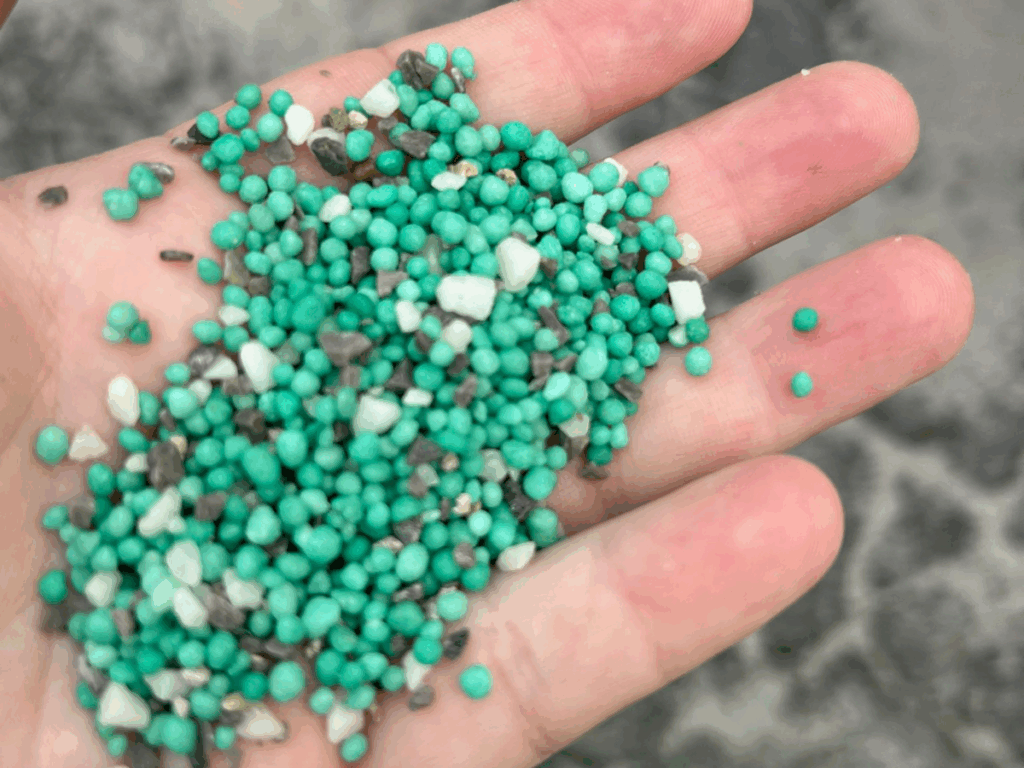
Polymer-coated urea (like Harrell’s POLYON® controlled-release fertilizer) stands out from other slow-release fertilizers due to its unique coating process. This involves multiple layers, allowing for various nitrogen release rates based on coating thickness. POLYON can release nutrients for up to 18 weeks and pauses during dormancy, due to the release of nutrients relying on temperature instead of moisture, only providing nutrients when temperatures increase.
Once you have selected a fertilizer, the timing of application is key:
Do not overlook the role of potassium (K), which enhances winter hardiness, disease resistance, and wear tolerance in grass. A blend containing half a pound of nitrogen (N) and potassium (K) just before dormancy is ideal to prepare your grass for the cold and set it up for the best when it wakes up again.
For more insights on fall fertilization, including fertilizer options, application timing, and benefits, reach out to your local Harrell’s Representative. They are your go-to resource for product information and any lawn-related questions or recommendations for your specific lawn care needs. To learn more about POLYON® controlled-release fertilizer, check out this video featuring Dr. Jeff Atkinson explaining its benefits and how it can help your lawn this fall.
Learn why SPRAYE is trusted by hundreds of lawn care operators across the country.
As always, I love your system! Thanks for always being so responsive. I will be recommending you to my colleagues.
100%. SPRAYE’s already made me way more money than the program cost. I love that now when someone calls in I can add them in right then and there from my phone and iPad and schedule them and be done. Average phone call is 4-5 minutes to quote, get their info input and added into the system.
Originally I was hesitant just because of the cost of a system like this but now I don’t know how I did without it 3 months ago. Lol

If you’re running a lawn-care business that includes fertilization and weed control services, staying ahead of...
Read more

Lawn Care Podcasts Every Lawn Care Professional Should Listen To Staying ahead in the lawn care industry...
Read moreHave questions? Want to see it in action? Even if you aren’t ready to move right now, you can still check it out and learn if SPRAYE could make a difference for your business. We promise: absolutely no pressure and no commitment necessary.